Originally reported by Santiago Cardona for Contxto (contxto.com), March 30, 2026
For Ghanaian football fans who have followed the Black Stars through the highs of 2010 and the heartbreaks since, the 2026 FIFA World Cup is shaping up to be unlike anything we have ever witnessed. Beyond the expanded 48-team format — which many believe gives African nations a stronger shot at glory — the tournament promises to be a technological leap that could change football as we know it.
FIFA President Gianni Infantino has described this year’s championship, hosted across the United States, Canada, and Mexico, as “the greatest show ever on planet Earth.” With 104 matches to be played, that is a bold claim. But the technology backing it up might just make it believable.
The Ball That Thinks for Itself
Remember the arguments at your local viewing centre when the VAR takes too long and the crowd is shouting at the screen? Those days may soon be behind us.
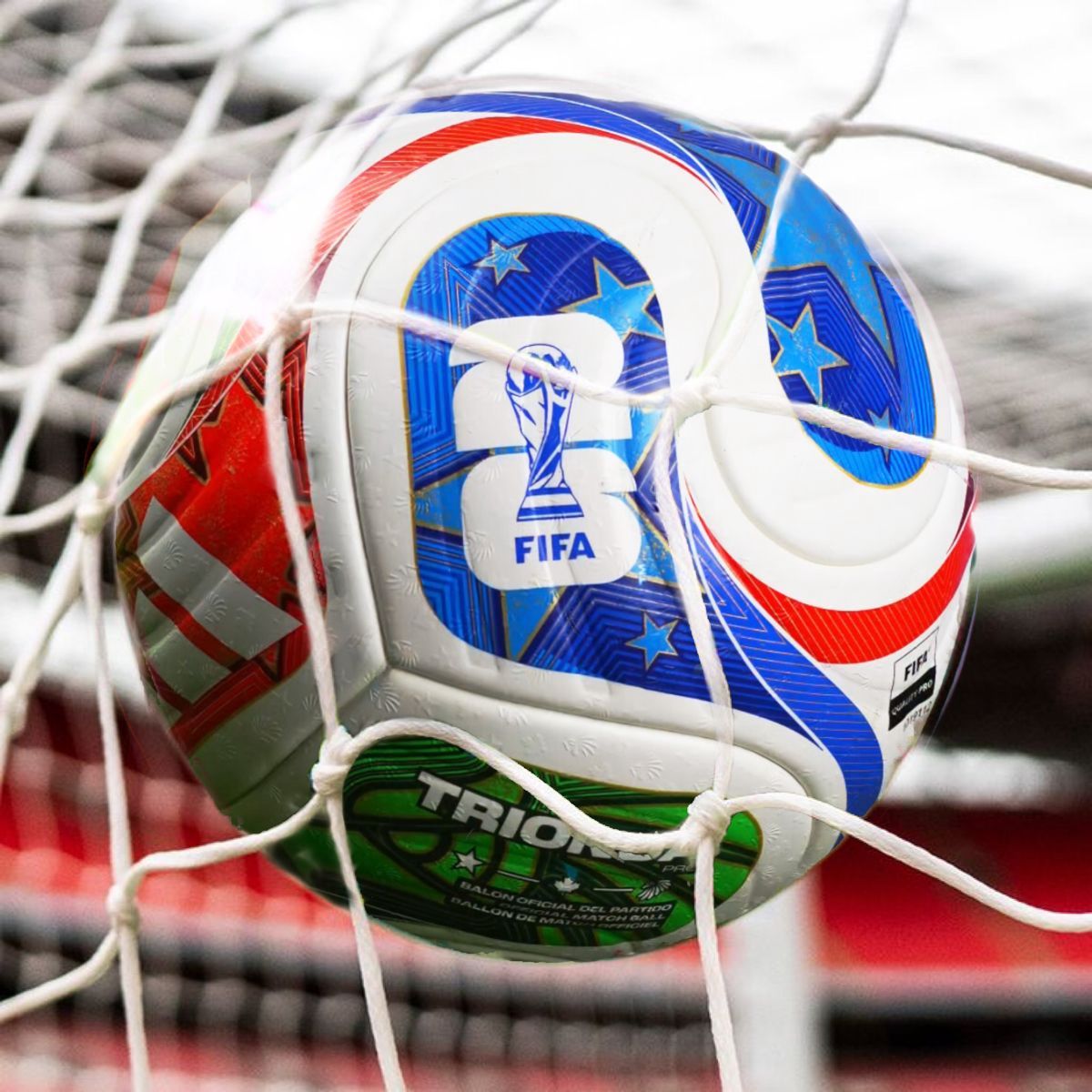
The official match ball, called the TRIONDA and manufactured by Adidas, has a sensor embedded inside it that transmits data 500 times per second directly to the VAR system. Developed in partnership with tech firm Kinexon, the ball can detect every touch within milliseconds — meaning offside calls, handball decisions, and goal-line controversies will be resolved far faster than we are used to. For fans in Accra, Kumasi, or Tamale crowding around screens at 2am to watch Ghana play, fewer agonising VAR delays will be very welcome.
AI Tools for Every Team — Including African Sides
One of the most significant developments is the introduction of Football AI Pro, an analytics platform that FIFA is making available to all 48 competing nations. The system processes hundreds of millions of data points per match, drawing on video, graphics, and 3D visualisations to offer tactical insights that were previously only available to wealthier football associations with large technology budgets.
This matters enormously for African teams. Historically, the gap in resources between, say, a European giant and a West African nation has been stark. If FIFA’s promise of democratising access to these tools holds true, national teams like the Black Stars could arrive at future tournaments with the same analytical firepower as France or Germany. That is a genuine shift in the balance of preparation.
No More Dubious Offside Calls
Ghana supporters will not have forgotten some of the baffling offside decisions that have gone against African teams in past tournaments. The 2026 edition takes semi-automated offside technology (SAOT) to a new level: every player will be digitally scanned before the tournament to generate a precise 3D avatar based on their actual body dimensions.
These avatars allow the system to track players accurately even during fast-breaking runs and crowded penalty box situations, producing clearer and more realistic graphics when displaying VAR rulings to referees and viewers alike. President Infantino has said the system will ensure “precise player identification and tracking” and deliver “faster decisions and a clear understanding by everyone.” For fans who have spent years debating whether a shoulder or an armpit was in an offside position, this is progress.
Referees with a New Perspective
In another innovation, referees will wear AI-stabilised body cameras, offering broadcasters and fans a first-person view of key moments. The system, known as Referee View, uses real-time algorithms to smooth out the footage so what viewers see is steady and high-quality — the same perspective the referee had when making a decision.
Imagine watching a penalty shout in a Ghana game and being able to see exactly what the referee saw in real time. The technology will not make every decision popular, but it will make officiating far more transparent.
The Infrastructure Behind It All
All of this runs on servers and networks supplied by technology firm Lenovo, designed to handle the enormous volumes of data generated across 16 venues simultaneously — with low latency even during the most intense moments of a match.
The contrast with Qatar 2022 is telling. At that tournament, VAR was largely a secondary review system. At the 2026 World Cup, all these components — the smart ball, the player avatars, the body cameras, the AI analytics — will work together as one connected system in real time.
What This Means for African Football
Beyond the spectacle, the broader promise of this tournament is that technology can level a playing field that has long been tilted. If Football AI Pro genuinely gives smaller football associations access to elite-level data analysis, and if the officiating tools reduce the kind of marginal errors that have cost teams dearly in knockout rounds, then the 2026 World Cup could mark a turning point not just in how football is watched, but in who gets to compete on truly equal terms.
For Ghana, a nation that has always punched above its weight on the continental and global stage, that is a prospect worth staying up until 3am for.